
Ocean Accounts for Sustainable Ocean Plans: Enabling Decision-Makers to Measure Progress
Learn More
The 'Handbook on Sustainable Ocean Plans: A Practitioners' Guide' provides a practical framework to help countries design and implement Sustainable Ocean Plans (SOPs). SOPs are comprehensive, country-driven frameworks to sustainably manage 100% of the ocean area under national jurisdiction.
The ‘Handbook on Sustainable Ocean Plans: A Practitioners’ Guide’ provides a practical framework to help countries design and implement Sustainable Ocean Plans (SOPs). SOPs are comprehensive, country-driven frameworks to sustainably manage 100% of the ocean area under national jurisdiction.
The Handbook was developed to guide practitioners, policymakers, and partners through a structured, step-by-step process to create, finance, and implement effective SOPs that balance ecological integrity with social and economic development.
Ocean accounts are recognised as a key tool and methodology for effective and integrated data analysis. The Handbook provides guidance on developing these accounts and their associated indicators.
As outlined in the Handbook, ocean accounts enable decision-makers to:
The Handbook provides an example list of economic, environmental and social indicators, which ocean accounts can contribute to.
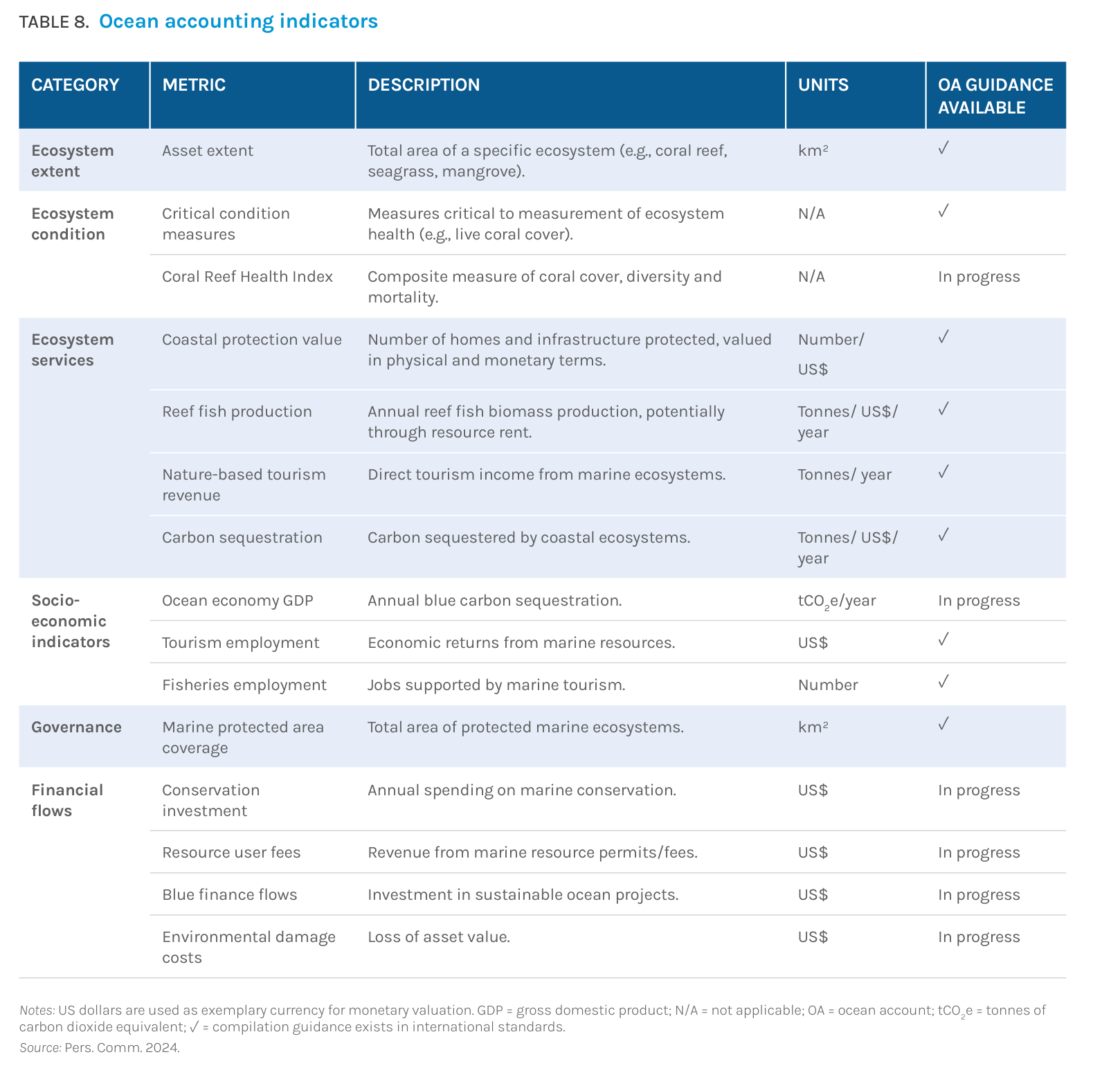
Source: Handbook on Sustainable Ocean Plans: A Practitioners’ Guide (p 63)
Several GOAP Members and partners contributed to this work as part of the expert team of authors, these include Dr Philip James as one of the leading authors, and contributions from Mitchell Lyons (GOAP Secretariat) and Irfan Yulianto (Rekam Nusantara Foundation).
Learn More
Progress report: How countries across global regions are moving ocean accounts from concept to implementation
Learn More
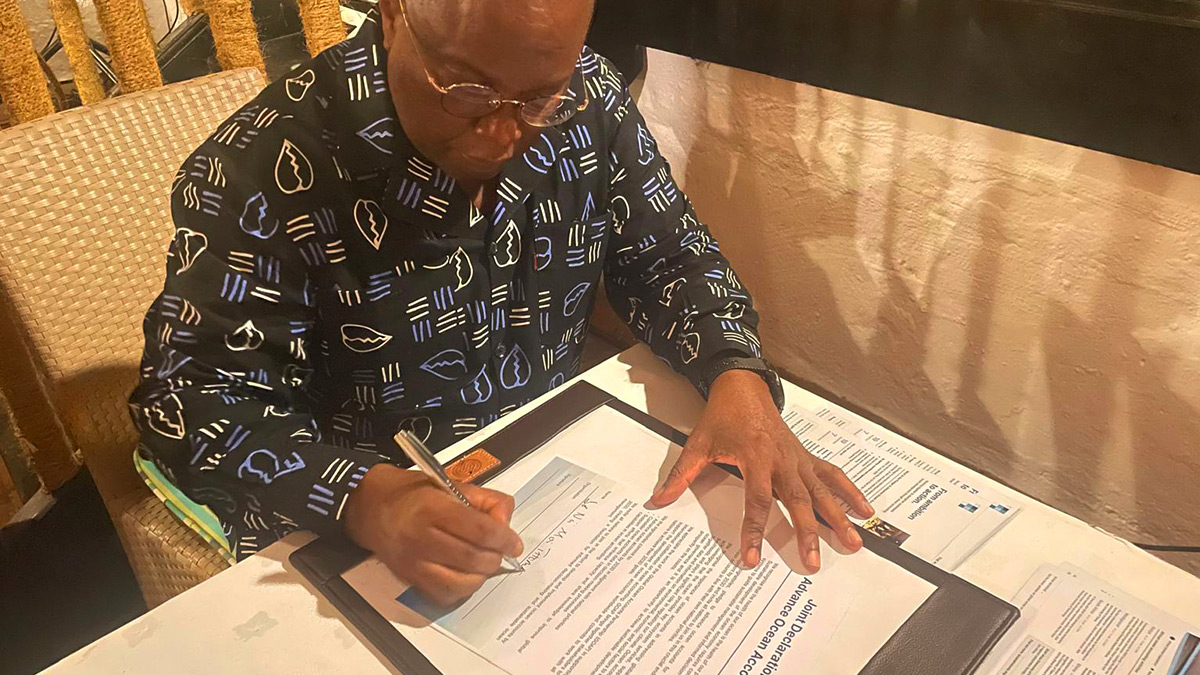
Led by Costa Rica, the Pledge is open to countries and organisations that want to work together to strengthen the role of ocean accounting in governance.
Learn More