Ocean Accounts of Indonesia
Indonesia's ocean accounts pilot.
Learn More
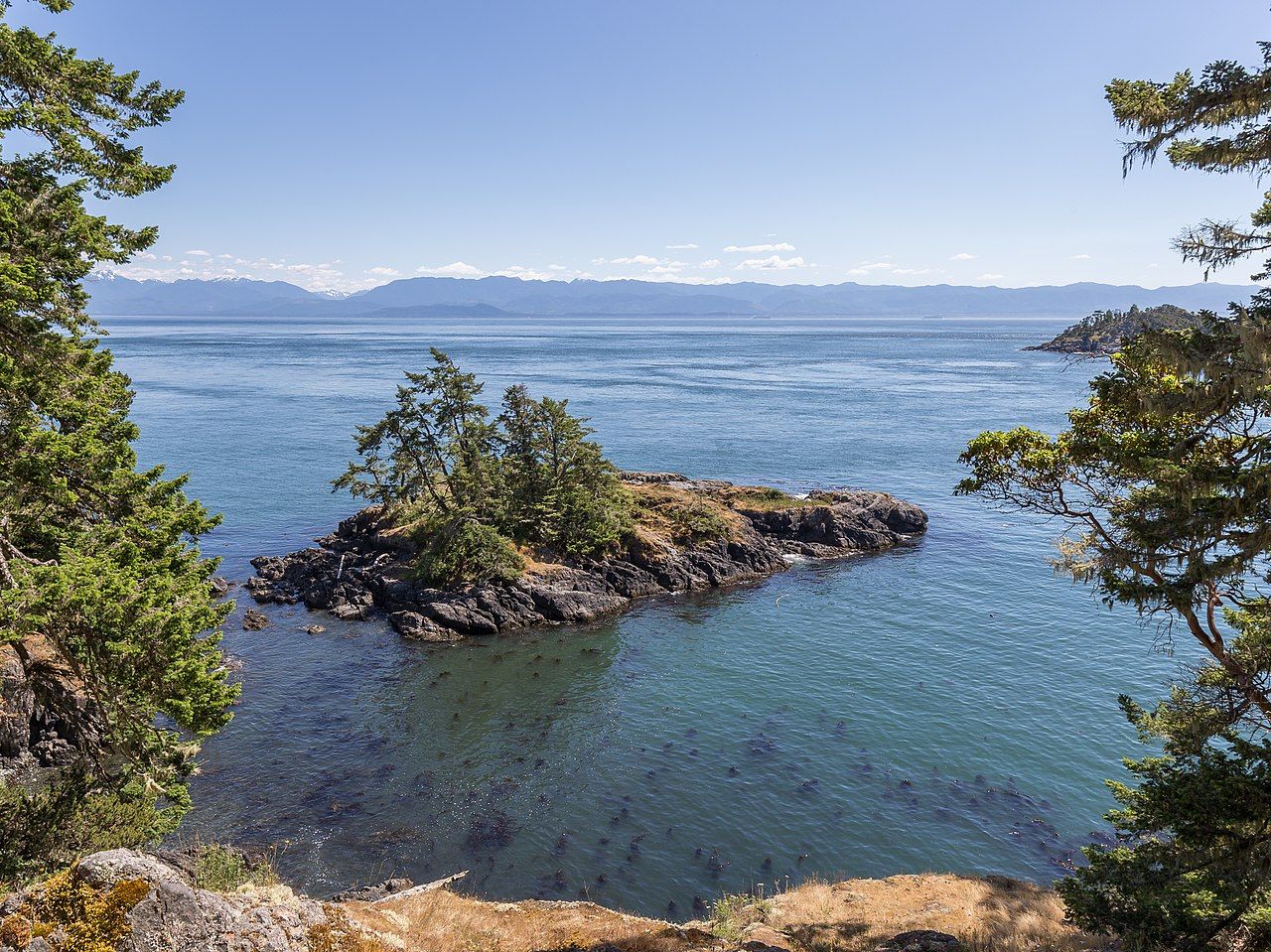
Canada
2019 - 2023
Complete
The Canadian Ocean Accounts pilot was established as a collaborative project of the Department of Fisheries and Oceans (DFO) Canada and Statistics Canada (STC) in early 2019. With a budget of approximately $1 million over four years (FY2020-2023), the Canadian pilot supports the commitments outlined in the Charlevoix blueprint for healthy oceans, seas and resilient coastal communities made under Canada’s G7 Presidency and as part of the High Level Panel for a Sustainable Ocean Economy (Ocean Panel). The Ocean Panel is committed to developing a complete sequence of national Ocean Accounts by the national statistical offices, in partnership with marine agencies, the details of which are outlined in the Blue Paper on ‘National Accounting for the Ocean and Ocean Economy’. This commitment was reinforced in the transformational agenda where the Ocean Panel calls on ocean states to secure ocean health and wealth for generations to come, including the development and integration of Ocean Accounts into national accounts that go beyond the traditional economic development indicator of GDP.
This pilot is based on many earlier successful joint projects, such as the Measurement of Ecosystem Goods and Services (MEGS). MEGS had already published data on fisheries biomass and landings by region, as well as fishery employment by area.
STC leverages its experience in compiling SNA and SEEA accounts, integrating fragmented data and establishing new socio-economic data collection when required. DFO collects and analyzes volumes of scientific, economic and commercial fishing data. The two departments initially scoped the availability of relevant data in the light of Canada’s ocean-related policy objectives such as the Oceans Act, Species At Risk Act, and the Fisheries Act.
The pilot has wrapped up and demonstrated a sufficient level of success for consideration of full-fledged national Ocean Accounts for Canada. In the meantime, STC, under the Census of the Environment umbrella, has secured funding to create a spatial register of Ecosystem Assets that covers the extent and conditions of marine and coastal ecosystems.
The main objective of the pilot was to create initial national accounts of ocean and coastal ecosystem extent and condition (including four key ecosystems, seagrass meadows, kelp forest, cold water coral and sponge reefs, and saltmarshes, as well as data on sea surface temperature, salinity and sea ice).
The Canadian Ocean Accounts project is national in scope, covering Canada’s exclusive economic zone (EEZ) in the Arctic, Atlantic and Pacific oceans.
The Canadian Ocean Accounts pilot is aligned with the Ocean Accounts Framework developed on the initiative of the United Nations Economic and Social Commission for Asia and the Pacific (UN ESCAP). In accordance with the Framework, the pilot requires organizing information, which is currently collected using different concepts and classifications and dispersed across different orders of government, ministries, academic institutions, and other agencies. It also supports producing some new data in cases where the information is not yet available.
A diagnostic of ocean-related statistics in Canada was conducted to determine priorities for data development under the pilot. The diagnostic focused on ocean-related challenges and national priorities as expressed in existing official policy documents to identify existing data sources, partners that could be engaged in data development, existing national and international related data integration products, related statistical development activities, and other initiatives that could benefit from or contribute to the pilot project.
Initial findings were that (a) much data and research were available, but required inventorying, harmonization, gap analysis and inter-sectoral cooperation, (b) advanced work was already ongoing on measuring the ocean economy that could benefit from improved data, and (c) several initiatives, such as Marine Protected Areas, could benefit from applying international standards on measuring market and non-market services. The diagnostic suggested a work plan to produce priority accounts aiming at overcoming identified constraints, taking advantage of national and international opportunities, and taking short-term priority actions to advance the pilot.
Following the suggestions of the initial diagnostic, the pilot focused on: leveraging existing open data sources to develop extent and condition accounts; refining the ocean/marine economy accounts; supporting international (GOAP, UN-SEEA, UN ESCAP, OECD) efforts to develop standards; providing incremental support for data collection and analysis of priority ecosystems and their services; undertaking and/or supporting the development of knowledge products; and, on-going engagement activities within DFO and with other federal departments.
Several knowledge products have been produced by DFO and STC as part of the Canadian Ocean Accounts pilot project including: an overview document for Canada, summarizing the results of the diagnostic and the data assessment; an international literature dataset on ecosystem extent, condition and service measures, and two bibliographic publications (Canada Ocean Accounts Pilot Bibliographic Research; Canada Ocean Accounts Pilot Bibliographic Research: Canadian Science Advisory Secretariat (CSAS) Science Advisory Reports (SARs)); a joint paper on Canada’s oceans and the economic contribution of marine sectors; the publication of Accounting for ecosystem change in Canada in January 2022 with thematic maps that provided a preliminary base for the Census of Environment: Ocean and coastal ecosystems, 2020 and associated extent account; and an estimate of the blue carbon storage capacity of eelgrass beds in Canada, as part the Blue Carbon project carried out in collaboration with University of British Columbia.
Statistics Canada (STC)
Fisheries and Oceans Canada (DFO), Economics, Statistics, and Data Governance Directorate