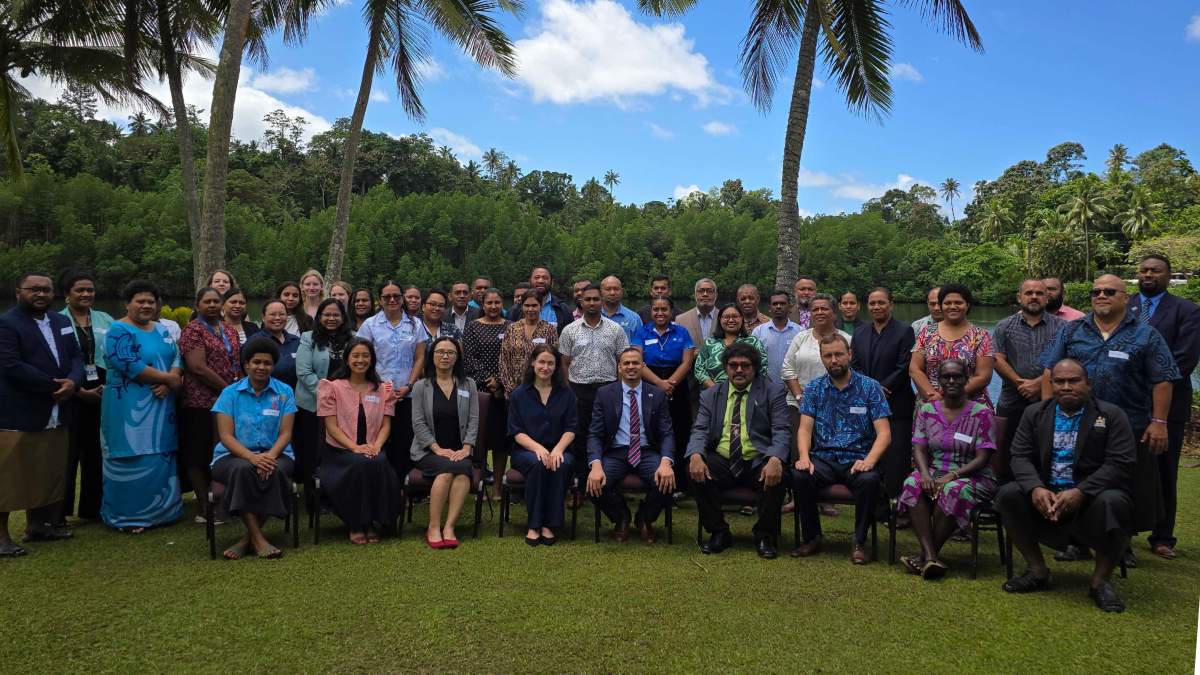
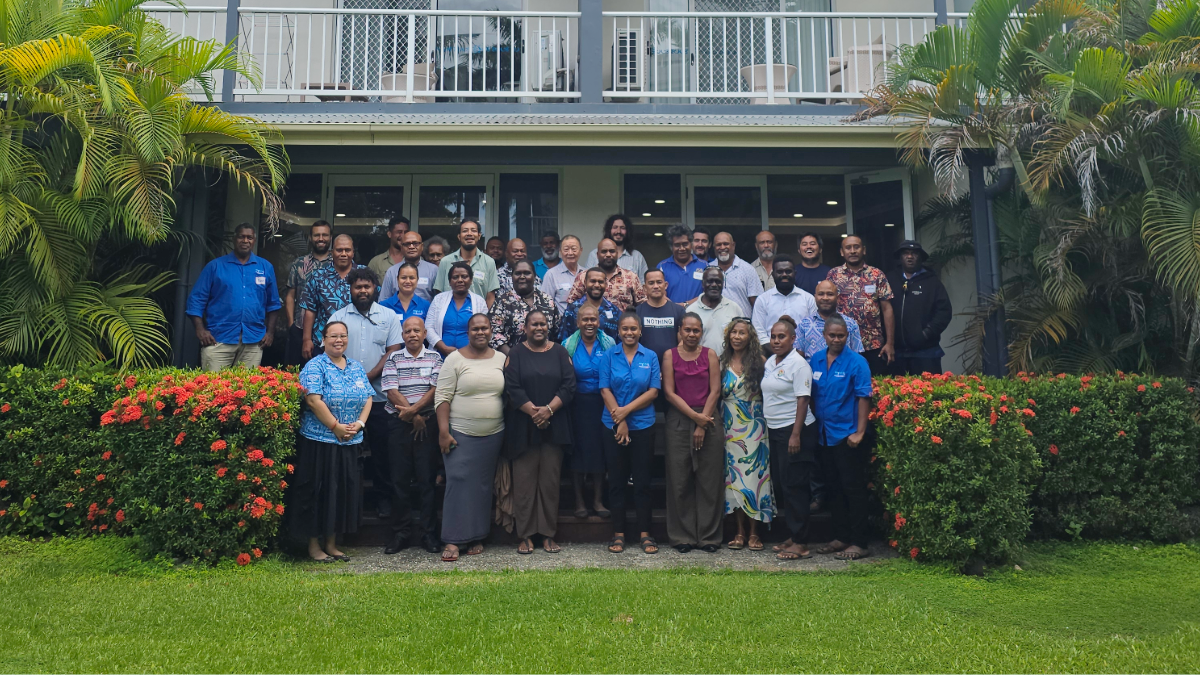
In October, the Ministry of Environment and Climate Change in Fiji brought together government ministries, NGOs, regional organisations, industry representatives, and academics for a three-day workshop focused on strengthening the nation’s data systems for plastic waste management.
The event marks another milestone in Fiji’s journey toward becoming a regional and global leader in evidence-based environmental policy.
Fiji’s Vision and Current Landscape
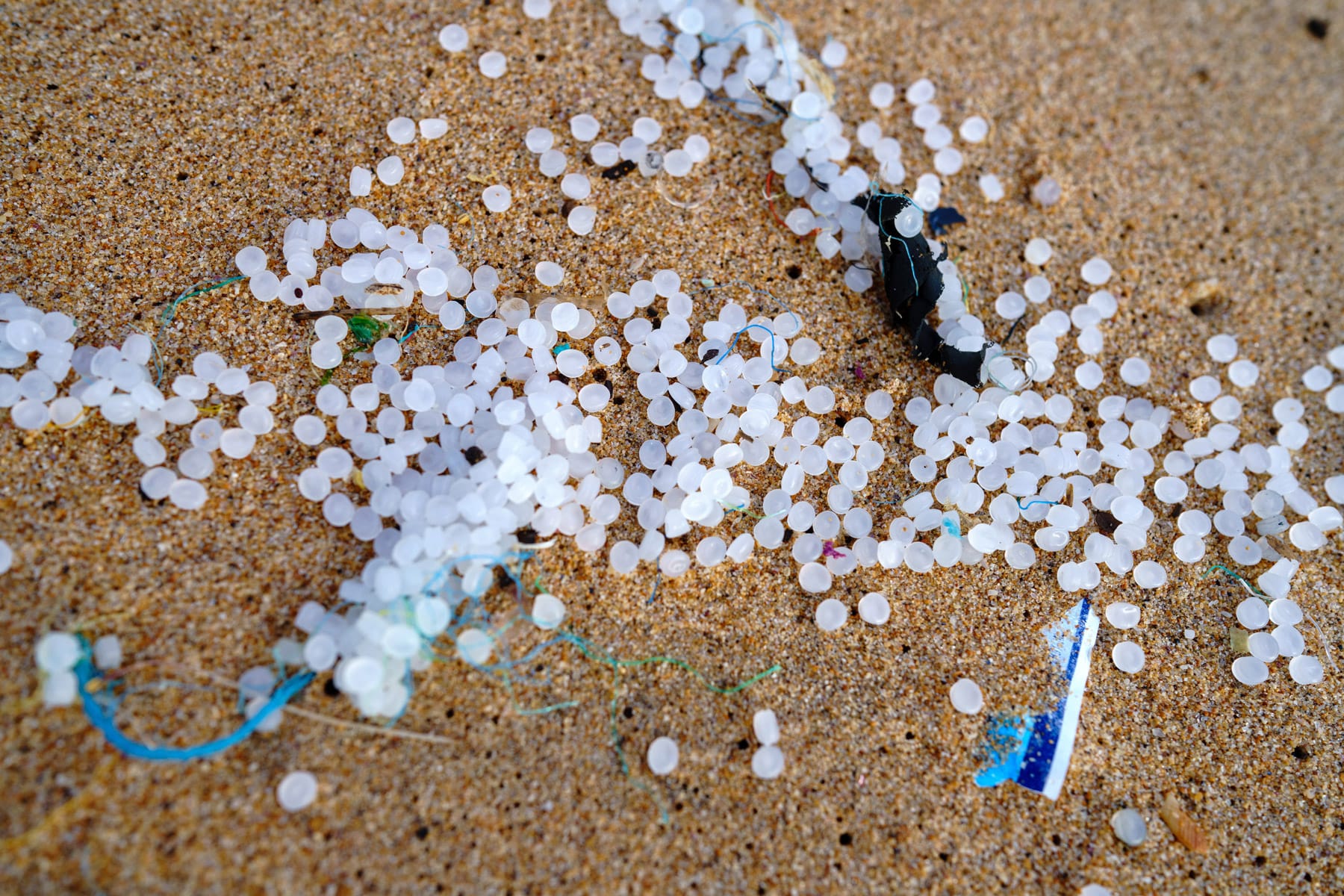
Fiji faces unique challenges in managing plastic pollution. Located at the intersection of ocean currents, Fiji is impacted by plastic pollution washing up on its shores while contending with limited waste management infrastructure spread across dispersed islands.The environmental and economic impacts are significant, affecting key sectors including tourism, fisheries, and public health.
In the face of this the Government of Fiji has made significant policy and strategy responses to the problems of plastic waste and how to shift to a more circular economy. The 2020 single-use plastic bag ban and the country’s participation in the High Ambition Coalition to End Plastic Pollution signal clear intent. More recently, the launch of the Fiji National Data Portal in 2024, amendments to the Statistics Act, and the National Digital Strategy 2025-2030 have established foundations for integrated data systems that can drive meaningful change.
The Data Challenge
Despite these advances, waste and plastics data remain fragmented. Without reliable information on plastic manufacturing, waste collection rates, and disposal pathways, policymakers cannot design targeted interventions or assess policy effectiveness. This data gap also impacts infrastructure investment, as funders seek solid baseline data and measurable impact projections.
The challenge is compounded by Fiji’s geography, systematic data collection is logistically complex and resource-intensive. While various donor-funded projects and community initiatives collect valuable environmental data, this information often remains inaccessible on national platforms.
Workshop Outcomes and Highlights
The national workshop in October tackled these challenges head-on. Participants identified a critical insight: despite multiple initiatives collecting data throughout the plastics lifecycle, siloed approaches threaten institutional knowledge retention. Breaking down these barriers and building trust across government, industry, academia, and communities emerged as essential to progress.
The workshop also reinforced Fiji’s positioning as a pioneer in evidence-based decision making, committed to both ocean accounts and a national account for plastics.
The work undertaken will inform both domestic policy development and Fiji’s active participation in global plastics treaty negotiations, demonstrating how small island nations can lead on major environmental challenges.
The Path Forward
Clear next steps emerged from the workshop. Fiji will develop its National Plastics Inventory, becoming the first Pacific nation to undertake this comprehensive tracking of plastic flows from import to disposal.
As the Permanent Secretary for the Ministry of Environment and Climate Change Dr. Sivendra Michael has emphasised, Fiji sees data as a “national asset”.
Strengthening inter-agency coordination and mapping plastics and biodiversity hotspots will provide the data needed to model policy interventions, including Container Deposit Refund and Extended Producer Responsibility schemes, that can support Fiji with an evidence base for policies and strategies to reduce plastic pollution.
Dr. Michael noted that this work on integrated data systems, including Ocean Accounts, “is not only looking at the data side, but also looking at the ecological, social, and economic impact of plastic pollution. That gives us a good sense and justification to try and introduce a reform that would really benefit the economy at large.”
Critically, this approach builds on existing initiatives rather than duplicating efforts, ensuring sustainable, nationally-owned data systems. All data generated through partnerships will be fully owned and managed by the Fiji Government, with international partners acting as facilitators and capacity builders.
The collaboration between Fiji’s Ministry of Environment and Climate Change, UNSW Centre for Sustainable Development Reform, the Global Ocean Accounts Partnership and The Pew Charitable Trusts demonstrates the power of partnership rooted in respect for national sovereignty and local leadership. As Fiji continues this important work, it offers a model for other nations facing similar challenges in building the evidence base needed for effective policy to address plastic pollution.